
Wheeled Skid Steer Loaders vs. Compact Track Loaders
The Ultimate Battle: Should You Choose a Wheeled or Tracked skid steer Loader?
Choosing between traditional wheeled skid steer loaders and compact track loaders (CTLs) is one of the most important decisions equipment buyers face. While they look similar and use the same attachments, their performance can vary significantly depending on terrain and application. Let’s analyze the key factors.
Head-to-Head Comparison: Key Performance Differences
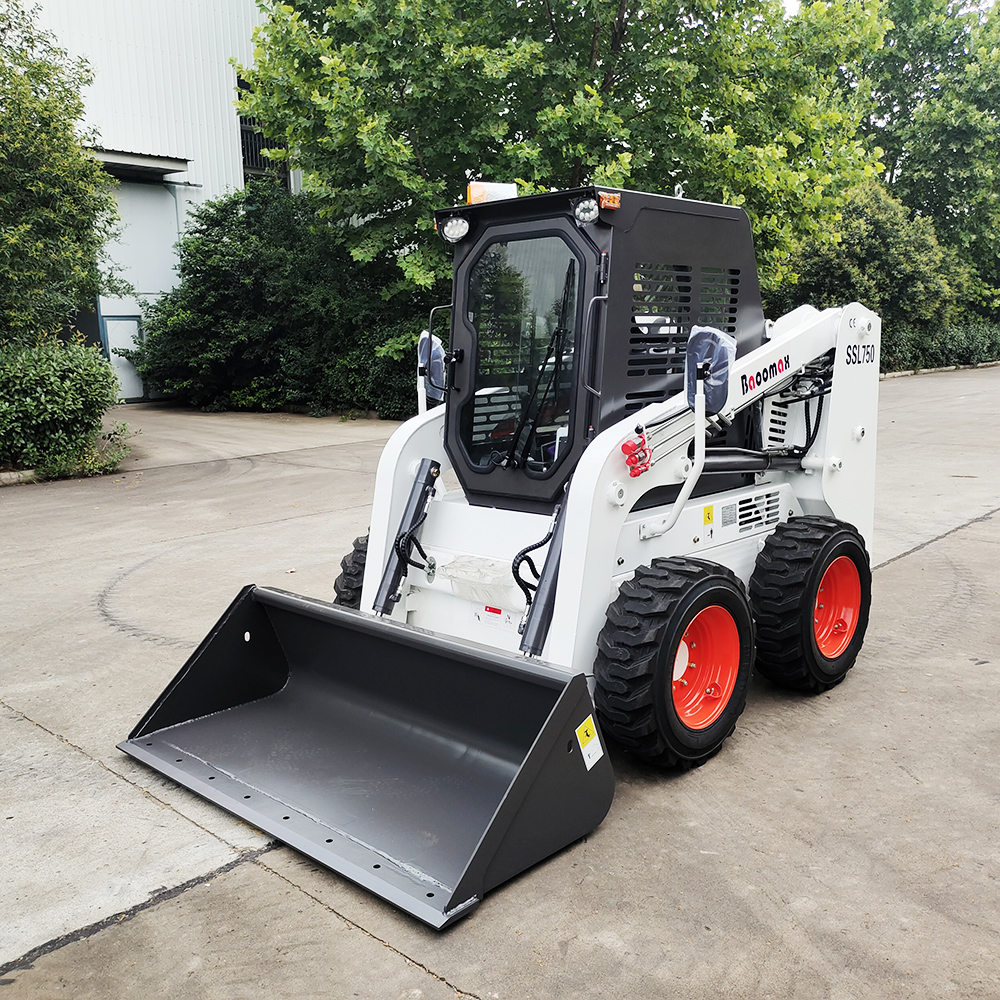
- Ground Pressure vs. Road Surface Protection Wheeled Skid Steer Loaders: Ground pressure is 15-25 PSI. Their narrow ground contact area can damage lawns, asphalt surfaces (especially when turning), and loose soil.
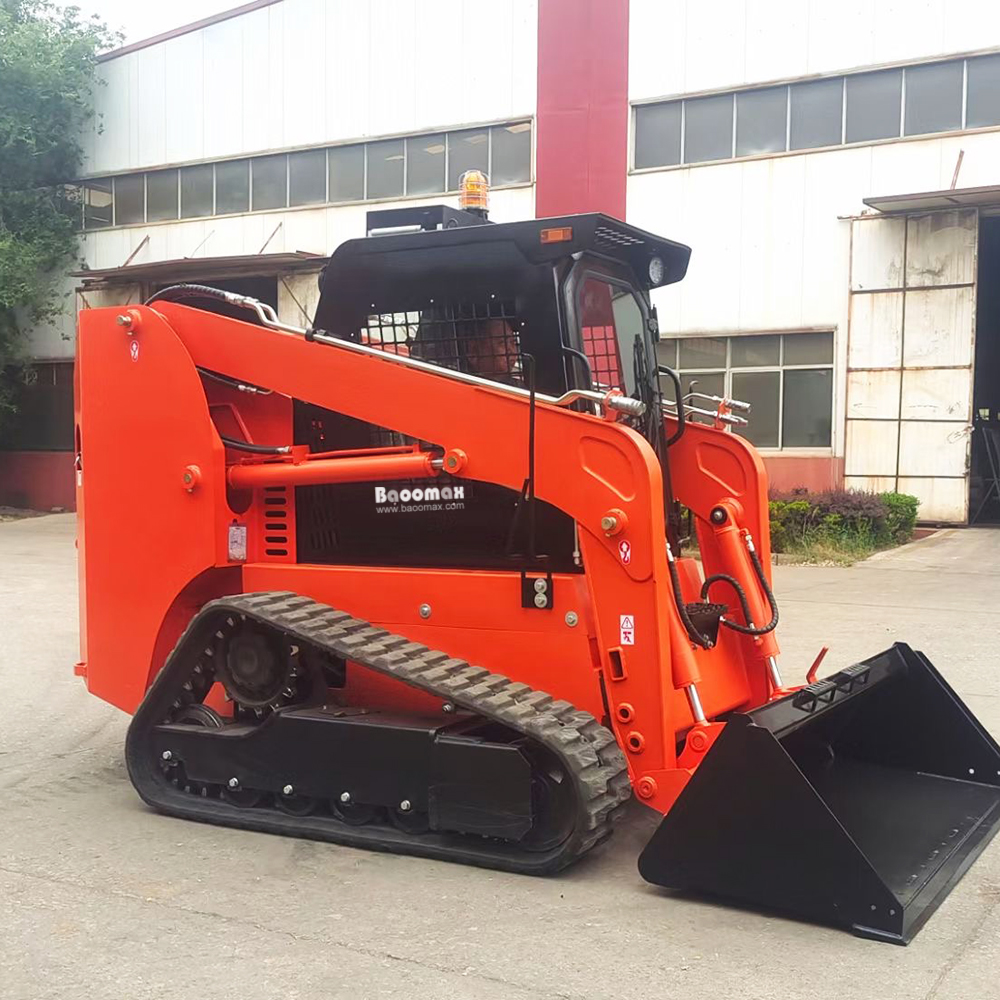
Compact Track Loaders: Weight is distributed over a larger area, generating a ground pressure of only 3-7 PSI. This “buoyancy” effect minimizes rutting and protects vulnerable road surfaces. Compact track loaders have the advantage on soft/sensitive ground.
- Traction and Stability
Wheel skid steer loaders: Perform excellently on hard, dry surfaces. On muddy, sandy, or loose gravel surfaces, the wheels may slip, making movement more difficult.
Compact track loaders: Due to their larger contact area, they offer superior traction in almost all conditions. They are more stable on slopes and uneven terrain. The winner in traction: Compact track loaders.
- Speed & Maneuverability
Wheel skid steer loaders: Faster on hard surfaces (up to 12 mph). More responsive and faster on asphalt or concrete.
Compact tracked loaders: Slower (typically 6-9 mph). Zero-radius turns on grass can be difficult. Skid steer loaders have the advantage in speed on hard surfaces.
- Maintenance & Operating Costs
Wheeled skid steer loaders: Lower initial purchase cost. Tire replacement, while common, is relatively simple.Compact tracked loaders: Higher initial cost (15-30% more). Chassis maintenance is crucial and costly—tracks, rollers, and sprockets wear out and need replacement. Lower operating costs: wheel skid steer loaders win.
Decision : Which Machine Should You Choose?
Choose a wheel skid steer loader if you meet the following criteria:
You primarily work on paved roads or very firm ground.
Budget is a primary consideration.
You need to travel at maximum speed between different work locations on the same plot.
Your work rarely involves mud, sand, or soft terrain.
You prefer a machine that is easier and less expensive to maintain.
Choose a compact tracked loader if you meet the following criteria:
You frequently work on lawns, turf, or loose/uneven ground.
Minimizing ground damage is your top priority (e.g., landscaping, golf courses).
You frequently work in wet, muddy, or sandy conditions.
You need maximum traction for leveling, digging, or hilly terrain.
Operator comfort is paramount (tracks typically offer a smoother ride).
Hybrid Solution: Wheel-Mounted Tracks
Still undecided? Polyurethane or rubber tracks can be fitted onto the wheels of a skid steer loader, providing a compromise. They offer better buoyancy than wheels alone, but their performance is inferior to a true tracked loader (CTL). They are a good option for seasonal use (such as winter snow removal), but will increase wear on the machine’s drivetrain.
Final Conclusion: There is no one-size-fits-all “best” machine—only the machine best suited to your specific working conditions and applications. Consider the situations in which you will use it 80% of the time, and use that as a guide for your selection.